The Weight of Divine Command
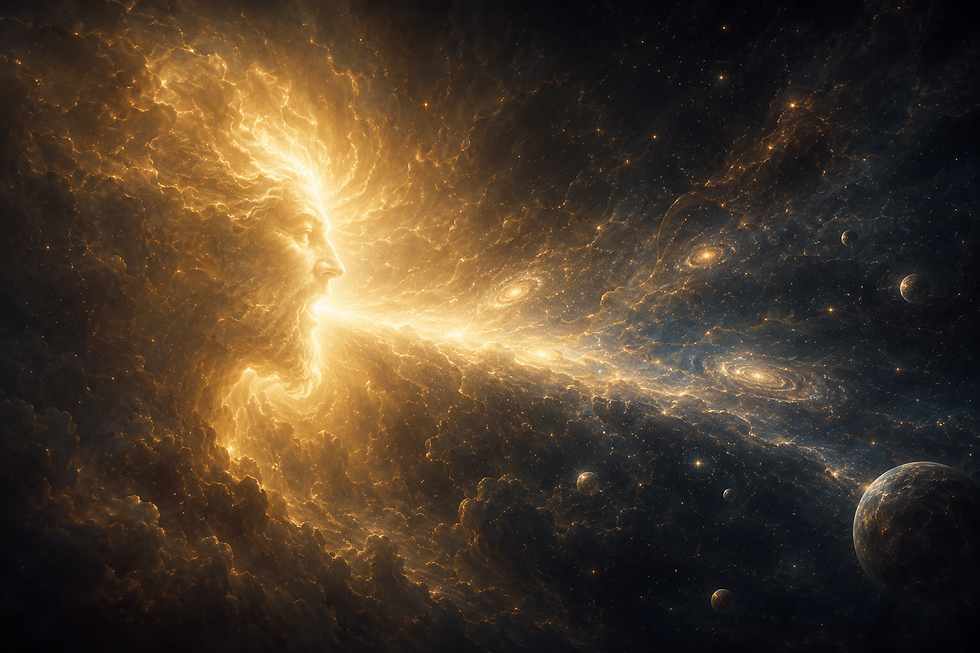
Creation exists because God commanded it to exist.
The mountains stand because He spoke.
The seas halt at their boundaries because He ordained them.
The stars burn in silent obedience because His word sustains them.
Every tree rooted in the earth, every creature roaming the fields, every wing stretching across the heavens owes its existence to the authority of divine command.
The opening chapters of the Book of Genesis reveal a universe not governed by randomness, but by the sovereign speech of God. Again and again, Scripture repeats the rhythm of creation:
“And God said…”
These words carry immense theological weight. Creation is not self-originating. The world is not eternal. Nature is not autonomous. Everything visible and invisible stands beneath the authority of the Creator’s voice.
The earth did not rise from chaos by its own power.
The oceans did not choose their limits.
The trees did not decide to bear fruit.
The animals did not invent life within themselves.
All creation is the result of command.
This means the universe is fundamentally dependent. Every atom in existence owes continual allegiance to the Word that summoned it forth. The sun rises because God wills it. Seasons continue because divine faithfulness sustains them. Even what humanity calls “natural laws” are ultimately testimonies to the consistency of God’s sovereign decree.
Creation is not merely built by God; it is governed by Him.
The separation of land from sea reveals order imposed upon chaos. The waters, often symbolic of disorder and untamed power in Scripture, are restrained by divine authority. God speaks boundaries into existence, and creation obeys instantly. The sea — vast and terrifying to man — remains utterly submissive before its Creator.
Likewise, the earth produces vegetation only because God commands fruitfulness. Trees do not merely exist for beauty, though they are beautiful. They exist under divine purpose. Genesis repeatedly emphasizes that plants bear seed “according to their kinds,” reflecting intentionality, structure, and order within creation.
Nothing in Genesis is accidental.
The diversity of life is not evidence of randomness, but of divine wisdom overflowing into creation. Every animal formed upon the earth reflects the creativity of God Himself. The lion, the sparrow, the whale, the deer — each creature silently testifies to the majesty of the One who called it into being.
And yet all creation also reveals submission.
The animals obey instinctively.
The seas obey naturally.
The trees obey continuously.
Only man rebels.
This is one of the great tragedies woven into the Genesis narrative. The earth itself responds rightly to God’s command, while humanity — uniquely made in God’s image — resists the very voice that gives life.
The weight of divine command becomes especially clear in the Garden of Eden. Adam is surrounded by abundance, beauty, and provision, yet God gives one command:
“You shall not eat…”
This command was not an arbitrary restriction; it was a revelation of divine lordship. Obedience would acknowledge that God alone defines good and evil. To obey was to live under the wisdom of the Creator. To disobey was to seek autonomy — to attempt life apart from God’s authority.
Sin, at its core, is rebellion against divine command.
The Fall was humanity declaring independence from the voice that created them. The same Word that brought order into chaos was now rejected by those made to reflect God’s glory. And when man rejected divine authority, disorder entered creation itself.
The ground became cursed.
Pain entered life.
Death invaded the world.
Creation, once perfectly aligned beneath God’s command, began groaning beneath the consequences of human rebellion.
Yet even after the Fall, divine command remains sovereign.
The floodwaters in Noah’s day rose because God commanded them. Nations rise and fall beneath His authority. The heavens continue their courses because His decree still sustains them. Human rebellion never dethrones divine sovereignty.
And ultimately, Genesis points us toward the greater revelation of the Word of God in Gospel of John. The God who said, “Let there be light,” later enters creation Himself in the person of Christ.
The winds obey Him.
The seas recognize His authority.
Demons tremble before His voice.
Death itself submits when He commands Lazarus to come forth from the grave.
Jesus does not merely speak on behalf of God; He speaks as the divine Word through whom all things were created. The authority displayed in Genesis is revealed fully in Christ.
And nowhere is the weight of divine command seen more profoundly than at the cross.
Humanity rejected God’s Word, yet Christ obeyed the Father perfectly. Where Adam rebelled against divine command in a garden, Jesus submitted to the Father’s will in another garden, praying:
“Not my will, but Yours be done.”
Through His obedience, redemption enters the world. The curse unleashed through disobedience begins to be undone through the obedience of Christ.
Genesis, therefore, teaches us that creation is not merely about beginnings — it is about authority. The universe itself rests beneath the command of God. Every tree, every creature, every wave, every star declares His lordship.
And perhaps the most humbling truth is this:
The God whose command formed galaxies still speaks today.
His Word still creates.
His Word still convicts.
His Word still sustains.
His Word still calls dead sinners into life.
For all creation carries the same testimony from the first pages of Scripture:
Nothing exists independently of the voice of God.

Comments